A two-person team, and a site they control.
How a two-person investor relations team at Articore moved off an externally managed website and rebuilt it in-house, against a tight deadline.

- Industry
- Online creative marketplaces
- Headquarters
- Melbourne, with the CEO in New York and CFO in San Francisco
- Market cap
- ~A$115m
- With InvestorHub
- Since March 2026
Articore's investor relations is run by two people, and every change to their old site was a request to someone else.
- 3 weeks
- From signing to live, against about a month as standard
- 30%
- Share price rise after the 28 August FY26 results webinar
Source: Articore, 2026. The share price move is a market outcome reported alongside the briefing, not attributed to it.
Problem
Articore's investor relations function is two people. Between them they cover a business running three online marketplaces and an emerging creator storefront platform, with more than three million independent creators.
Their investor website was managed for them by an external provider. Every change went out as an email and came back with a lag. For a team of two trying to keep a story current through a turnaround, the constraint was not strategy or budget. It was that they could not touch their own site.
Impact
What changed first was control. Copy, images and navigation are now edited in-house and immediately, with no email and no lag, and the site is simple and clear for Articore's investors.
By the second month the team had moved past publishing and into analytics, looking at new versus churned shareholders and at buyer and seller activity around a specific announcement. Over the following ninety days Articore's LinkedIn following grew by roughly 163% on a lifted posting cadence, tracked through the platform. And on 28 August, five months in, the company ran its first ever live webinar results briefing, registered and hosted on its own hub, with the link embedded in the ASX announcement itself. Before InvestorHub, results presentations were pre-recorded.
Previously, even simple changes to website copy or navigation required us to go through our external provider, which added time and complexity. Now, we can make those changes ourselves, quickly and as needed. For a lean team of two, that level of autonomy is significant. It allows the website to evolve with the business, rather than constantly playing catch-up.
Step by step
How they did it.
Three moves, in the order Articore made them.
- 1
Weeks one to three: build it against a fixed date
Onboarding was compressed from about a month to under three weeks, so the hub would be live for the roadshow rather than shortly after it. Laura built it herself in the Hub Builder.
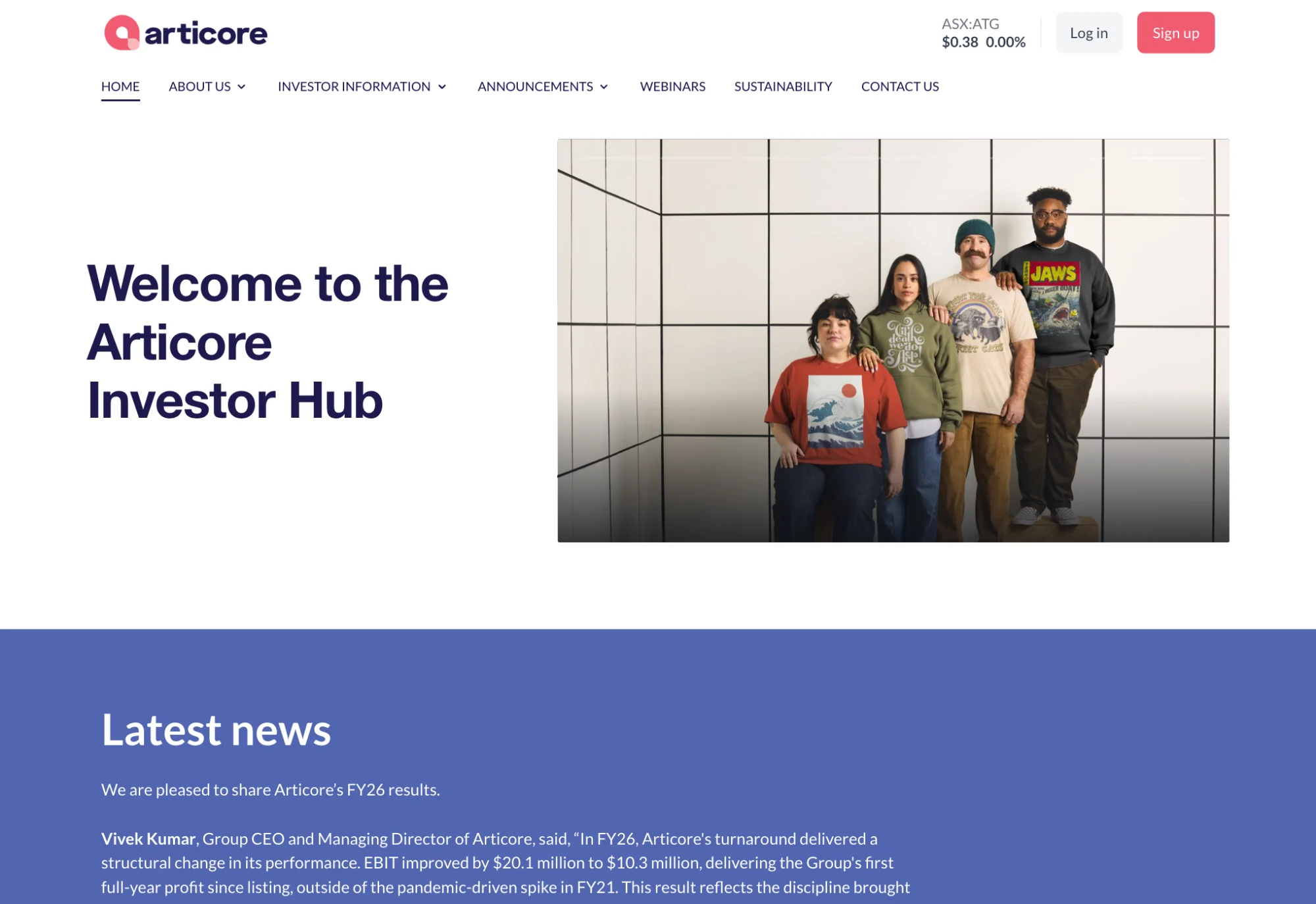
Source: Articore's investor hub, built in under three weeks. Captured October 2026.
- 2
Week five: cut over from the old provider
The hard cutover from the previous externally managed site followed on 3 April, two weeks after go-live, so the new hub was proven in front of roadshow traffic before the old arrangement was switched off. Editing moved in-house permanently at that point.
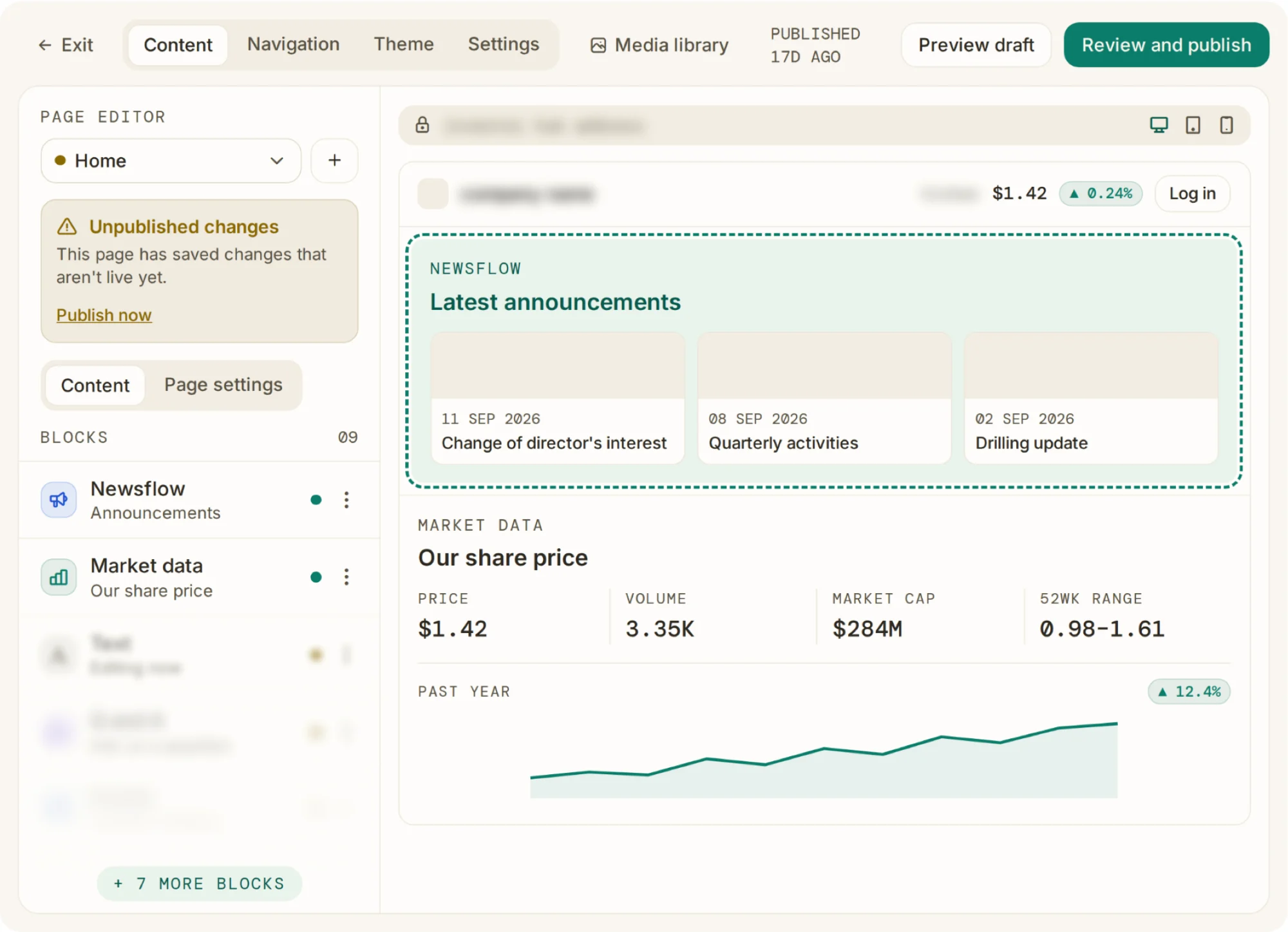
Source: An illustrative example of the InvestorHub Hub Builder.
- 3
Month two onward: start reading the register
By April the team had moved from publishing to analysis, using the CRM to look at new versus churned shareholders and at buyer and seller activity around a specific announcement. The CFO was given analytics access. Five months in, the first live results briefing ran on the hub, replacing a pre-recorded format for a management team split across New York, San Francisco and Melbourne, and giving shareholders the story directly from management.
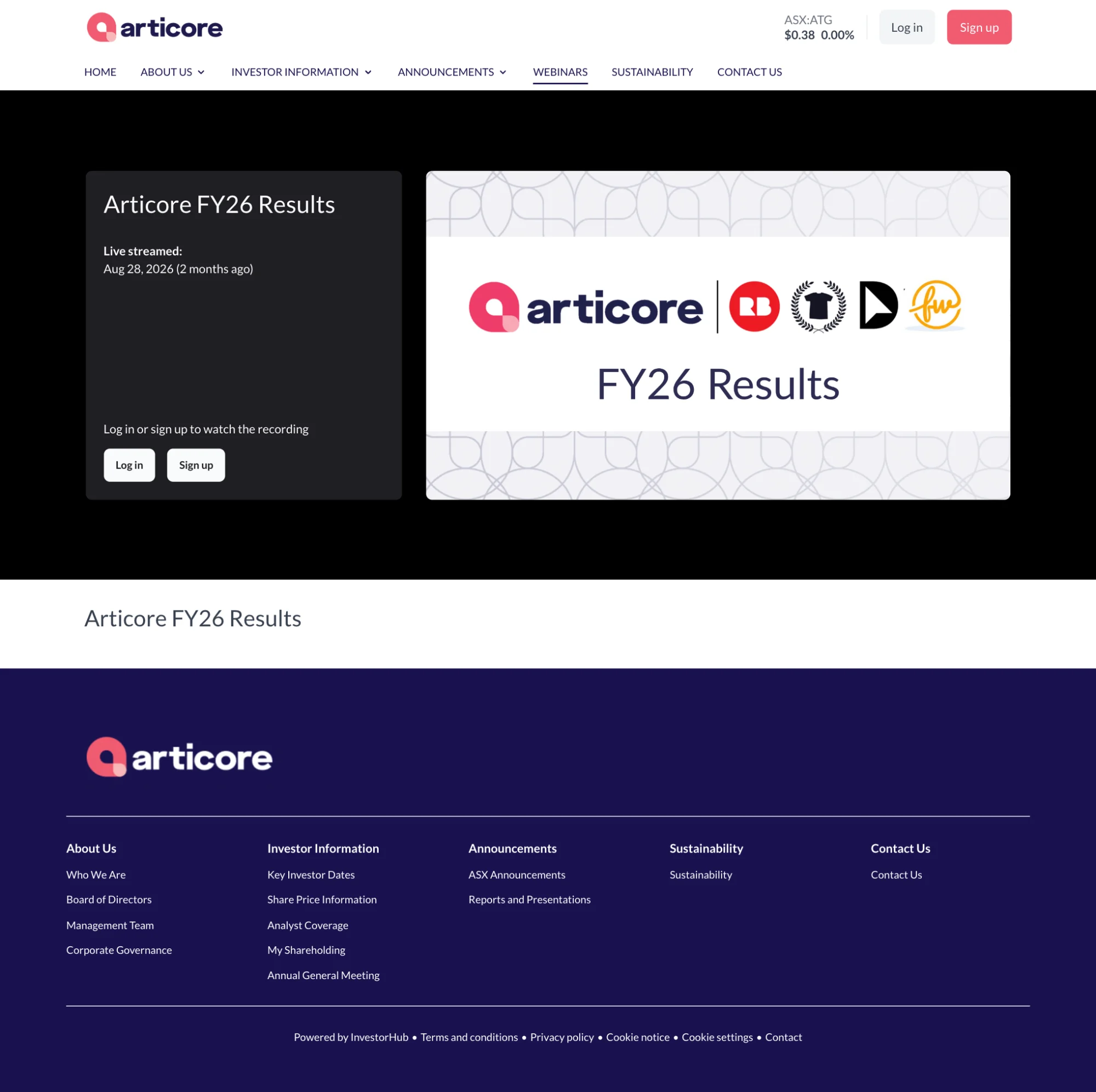
Source: Articore's FY26 Results webinar page. Captured October 2026.
The flywheel
Each turn makes the next one easier.
None of these are needle moving by themselves, but together and over time they combine and grow on each other to make each move more and more impactful.
- Attract
- Reach the whole register directly, rather than the twenty holders who take the calls. More of the register hears from you, so more of it can respond.
- Understand
- Every open, read, click and question is a signal about who is actually paying attention, and to what. The register stops being a list of names.
- Engage
- Answer what shareholders actually asked, while they are still asking it. That earns the next open, which is what makes the next turn sharper than this one.
Which is why the wheel doesn’t just keep turning, it gets better at turning. The register you engage this quarter is the register you understand next quarter.